
Polarized vs Nonpolarized Sunglasses: A Complete Guide to Choosing the Right Lens


Polarized sunglasses are more than just a fashion statement. They can also support your eye health by protecting you from harmful UV rays and even correcting your vision. But with so many different types of sunglasses on the market, it can be hard to know which ones are right for you. That’s where we come in!
With so many lens options, from polarized to tinted to mirrored, it can be hard to know which pair fits your life. This guide explains how polarized lenses work, when nonpolarized or tinted lenses make more sense, and how to choose the right option for your next pair of shades.

What are polarized sunglasses?
Polarized sunglasses reduce glare from horizontal light waves bouncing off reflective surfaces such as water, snow, sand, and roads. They have a built-in vertical polarizing filter that blocks these horizontally oriented light waves, allowing only vertically oriented light to pass through. This is what separates polarized lenses from basic dark lenses: the filter targets the specific light waves that cause glare rather than dimming everything evenly. Polarized sunglasses provide better clarity and contrast in bright outdoor conditions, offer UV protection, and help reduce digital eye strain caused by harsh reflections.
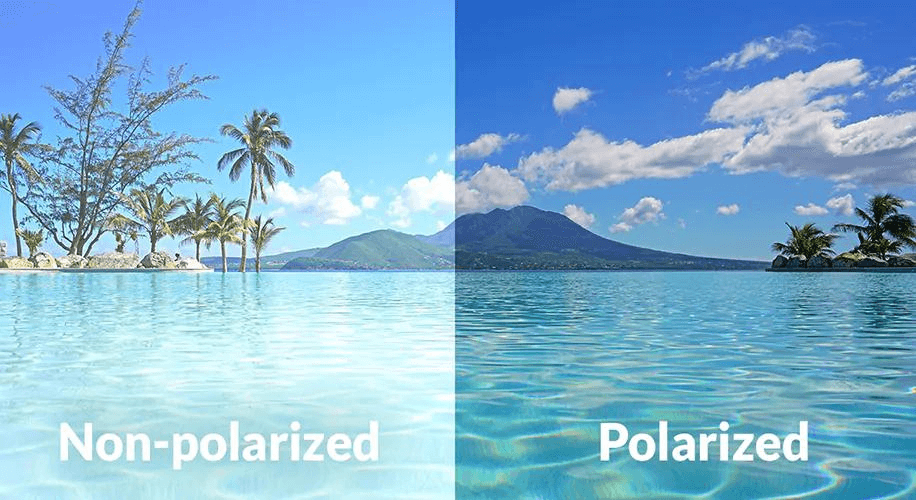
Polarized vs Nonpolarized Sunglasses: What’s the Difference?
The main difference comes down to that filter. Polarized lenses block horizontally polarized light, cutting glare from water, roads, and snow. Nonpolarized lenses lack this coating, so they darken your view evenly without directly targeting glare. Choosing between polarized and non-polarized sunglasses is more than just a style choice. It affects how comfortably you see in bright conditions and how clearly you can read a screen while you’re outdoors.
That does not make nonpolarized lenses inferior, just different. High-quality nonpolarized lenses still offer full UV protection. Because they don’t filter light selectively, they don’t interfere with the LCD or digital displays common in car dashboards and cockpits. That makes them a practical choice for drivers and pilots who rely on clear screen readability. Polarized lenses, meanwhile, are the stronger choice when reflective glare is the main problem, such as driving near open water or snow, boating, or spending a day at the beach.
So, do sunglasses need to be polarized? Not necessarily, but if reducing glare and improving visual comfort outdoors is your priority, polarized sunglasses are generally the way to go.
Benefits of Polarized Lenses
Polarized lenses offer several real advantages in the right conditions:
- Reduced Glare: Cuts the intense reflected light off water, roads, and snow.
- Enhanced Contrast: Makes edges and objects easier to distinguish in bright light.
- Reduced Eye Strain: Less squinting and fatigue during long days outdoors.
- True Color Perception: Glare can distort how colors appear; polarized lenses help maintain accurate contrast and vividness.
- UV Protection: Most polarized lenses block 100% of UVA and UVB.
- Improved Safety: Less glare from the road or other vehicles means better visibility while driving.
Polarized Lenses vs. Dark Tints
Dark tints take a different approach. Instead of filtering specific light waves, they reduce the overall intensity of light reaching your eyes. This makes dark tints a great option for everyday outdoor activities like walking or lounging in the sun. Dark tints have a real edge over polarized lenses for digital screens: polarized filters can darken or distort the display on phones and tablets used outdoors. In contrast, dark tints don’t interfere with screen readability. If glare from water or roads is your main concern, choose polarized. If you mostly need general brightness relief and outdoor screen use, dark tints are the better fit.
When to Avoid Polarized Lenses
Polarized lenses aren’t the right choice in every scenario. Consider skipping them if:
- You Rely on LCD Screens: Polarized filters can distort or darken displays on car dashboards, ATMs, and some digital devices.
- You Play Fast-Paced Sports: Activities like downhill skiing or cycling involve rapid lighting changes where polarized lenses may briefly hinder visibility.
- You Play Tennis, Pickleball, or Golf: If you find it harder to track the ball or judge distances while wearing polarized lenses, consider non-polarized sunglasses instead.
- Your Job Requires Precise Color or Screen Perception: Certain occupational tasks may not pair well with a polarizing filter.
As with any eyewear decision that affects your vision on the job or during higher-risk activities, consult your eye care provider before switching.
Understanding Glare: Why It Happens
Glare is not one single thing. It generally falls into four categories:
- Direct Glare: Caused by a light source shining straight into your eyes, like the sun or oncoming headlights.
- Reflected Glare: Occurs when light bounces off a surface, like wet pavement, snow, or a computer screen.
- Discomfort Glare: Causes eye strain and makes it hard to focus without necessarily blocking vision outright.
- Disabling Glare: Severe enough to noticeably impair sight, often requiring an immediate response, like slowing down while driving.
Beyond eyewear, a few simple habits help reduce glare’s impact: avoid driving when the sun is at its peak or roads are excessively wet, adjust lighting in your home or workspace to cut down on harsh reflections, and position digital screens away from direct light sources.
Choosing Polarized Sunglasses for Your Activity
Polarized lenses tend to shine in specific scenarios:
- Water and Snow Activities: Boating, fishing, skiing, and snowboarding involve intense glare that polarized lenses are designed to cut. They can also improve depth perception, which helps anglers see beneath the water’s surface.
- Driving: Reduced glare from the road and other vehicles can make sunny or wet drives noticeably safer and help reduce fatigue on long trips.
- Everyday Style: Beyond function, polarized lenses come in fashionable mirrored colors like blue, green, lavender, and red, so you don’t have to sacrifice style for protection. Classic grey and brown tints remain popular too, for a more understated look.
Buying Tips: What to Look for
Before choosing your next pair of polarized sunglasses, keep a few things in mind:
- UV Coverage: Confirm the lenses offer complete protection against UVA and UVB rays.
- Lens Color: Different tints affect color perception and contrast differently depending on lighting conditions.
- Frame Fit: A comfortable, well-fitting frame matters as much as the lens technology inside.
- Your Main Activities: Think about where you’ll wear them most, whether that’s driving, fishing, or everyday errands, since that should guide your lens and frame choice.
For budget-conscious shoppers, Zenni’s affordable polarized sunglasses collection offers glare-reducing lenses without a high price tag.

Tinted Sunglasses at Zenni
Tinted sunglasses are lenses dyed a certain color, offering some glare reduction but not the same targeted filtering as polarized lenses. At Zenni, tint options include:
- Standard Tints: An evenly applied color coating, great for everyday wear and general outdoor activities.
- Gradient Tints: Darker at the top and lighter at the bottom, like an ombré effect, ideal for driving.
- Fashion Tints: A wide range of colors for trendy looks, including blue- and yellow-tinted glasses.
- Mirror Tints: A reflective outer coating that adds extra protection against intense light and glare.
Play tennis, pickleball, or golf? Consider contrast-enhancing tints such as rose, amber, brown, or copper. Depending on the lens and lighting conditions, these tints can help the ball stand out against the court, grass, or sky.
Whether you prioritize glare reduction, screen visibility, or personal style, Zenni has a lens option to match. Browse polarized sunglasses and find the pair that fits your routine.
Sources:
- https://www.aao.org/eye-health/glasses-contacts/polarized-lenses
- https://www.faa.gov/pilots/safety/pilotsafetybrochures/media/sunglasses.pdf
About the Author: Dr. Mori Ahi, O.D.
Dr. Mori has over 10 years of experience in eye care. She earned her undergraduate degree from UCLA and her optometry degree from the New England College of Optometry. She has worked in a variety of eye care settings and is passionate about helping her patients find a great pair of affordable glasses

FAQs
What is the main difference between polarized and nonpolarized sunglasses?
Polarized lenses use a filter that blocks horizontal glare from surfaces like water and roads, while nonpolarized lenses simply darken your overall view without targeting that glare specifically.
Are polarized sunglasses always better than nonpolarized?
Not always. Polarized lenses excel at cutting glare outdoors, but nonpolarized lenses can be better for tasks that involve reading LCD screens, like driving or flying.
Can polarized sunglasses make it harder to see my phone screen?
Yes, in some cases. Polarized filters can darken or distort certain digital displays, so dark tints or nonpolarized lenses are sometimes recommended for heavy outdoor screen use.
Do all polarized sunglasses offer UV protection?
Most do, but it’s worth confirming UVA and UVB protection specifically rather than assuming it based on polarization alone.
Can I get polarized lenses with a prescription?
Yes. Zenni offers polarized lenses across a wide range of prescription frames, so you don’t have to choose between vision correction and glare protection.




 United States