
Best Prescription Sport Sunglasses: A Complete Guide




For those who love spending time outdoors, whether hiking, biking, or simply enjoying a day at the beach, vision is key to experiencing and navigating the world around us. However, for individuals with prescription eyewear, the bright sun can pose a significant challenge. This is where prescription sunglasses come into play, offering a tailored vision solution that enhances both safety and enjoyment in the great outdoors. If you’re searching for the best prescription sport sunglasses for your next adventure, here’s what actually matters, beyond just looking good.
Enhanced Visual Clarity and Comfort
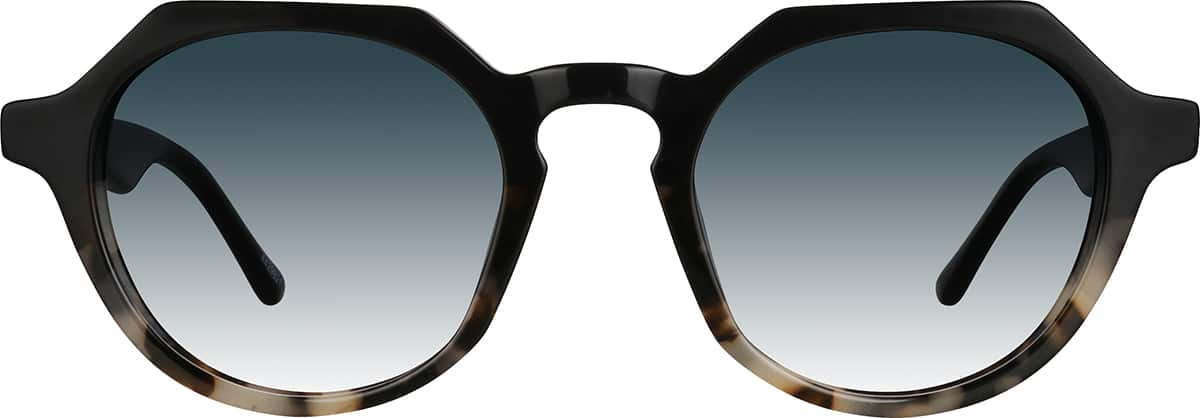
Shop These Zenni Sunglasses
Outdoor activities often take us into environments with varying levels of light and glare, which can impede our vision and enjoyment. Prescription sunglasses provide an all-in-one solution that addresses these issues head-on:
- Customized Vision Correction: They are specifically crafted to match your unique prescription, ensuring that you see as clearly in the sunshine as you do with your regular glasses.
- Glare Reduction: High-quality polarized lenses cut through glare reflecting off surfaces like water or pavement, reducing eye strain and allowing you to focus on the path ahead.
- UV Protection: Just as sunscreen protects your skin, the UV protection in prescription sunglasses shields your eyes from harmful ultraviolet rays that can lead to eye health issues over time.
- Transition Lenses: For those who move between shaded and sunny areas frequently, photochromic lenses, which darken in response to UV light, offer a convenient solution. No need to switch between glasses!
UV Protection and Eye Safety
Prolonged UV exposure is cumulative, and it’s one of the few risks that outdoor athletes tend to underestimate. Repeated exposure to UVA and UVB rays over time is linked to cataracts and macular degeneration, both of which develop gradually and are far easier to prevent than to treat. That’s why 100% UV protection, blocking the full range of UVA and UVB rays, should be treated as a non-negotiable baseline for any pair of sport sunglasses, not just a nice-to-have. Beyond the lenses themselves, wraparound and larger-coverage frames add a second layer of defense by blocking stray light and debris from the sides, which matters just as much during a windy trail run as it does on the water.
How Prescription Lenses Work in Sport Sunglasses
Getting a prescription into a sport frame is more complicated than it sounds, especially with wrap-around styles. There are generally two ways to do it: grinding the prescription directly into a curved lens, or fitting a smaller prescription insert behind a non-prescription wrap shield. Direct-glazed curved lenses are sleeker and more secure, but the curve itself can cause peripheral distortion, sometimes called the fishbowl effect, since a simple prescription surface doesn’t sit flat against a curved frame. Inserts avoid the distortion problem but add bulk and can fog or shift during activity.
Zenni’s Zunnies sport sunglasses take the direct-glazed route and solve the distortion problem with FreeForm lens surfacing, a digital process that customizes the lens surface for edge-to-edge clarity instead of only focusing correction in the center. The result is a wider, sharper field of view with no fishbowl effect, in a prescription lens built specifically for high-wrap frames. You can add either single vision or progressive prescriptions to Zunnies frames, so this isn’t limited to simple prescriptions, and the technology scales to whatever correction you need.
Lens Materials: Polycarbonate vs. Trivex
Not all impact-resistant lenses are the same. Polycarbonate lenses are a long-standing choice for sport and safety eyewear thanks to their durability and light weight. Trivex lenses are a newer alternative that’s even lighter than polycarbonate, with superior optical clarity and minimal distortion, while still holding up to impact better than regular plastic or glass. Both are available at Zenni across sunglasses, Blokz blue light, EyeQLenz, and Transitions lens options, so you can pair either material with the tint or coating your sport demands.
Choosing the Right Lens Tint for Your Sport
Lens tint isn’t just a style choice, it changes how well you see the ball, the trail, or the water. Here’s how to match your tint to your activity:
- Brown or Amber: Enhances contrast against blue and green backgrounds, a strong pick for court sports like pickleball and tennis, and for low-light conditions like early morning fishing.
- Gray: Reduces overall brightness while preserving true color recognition, ideal for bright, sunny days on the road, water, or trail.
- Green: Offers a balance of contrast and color accuracy for variable outdoor light.
- Copper or Yellow: Boosts depth perception in low light, popular among anglers watching for subtle movement beneath the surface.
- Photochromic: Transition lenses darken automatically as UV exposure increases, useful for activities that move between shade and direct sun, like trail running or cycling.
If your sport doesn’t cleanly fit one category, gray remains the safest general-purpose choice since it preserves true color recognition across most lighting conditions. Serious anglers and court sport players tend to benefit most from a dedicated tint, since the contrast difference is noticeable once you’re actually tracking a ball or a fish beneath moving water.
The Science Behind Polarization
Polarization gets mentioned constantly in sunglasses marketing, but the mechanism behind it is worth understanding. Ordinary light scatters in every direction, but when it reflects off a flat surface like water, snow, or pavement, it becomes polarized, meaning the light waves line up in a single plane, usually horizontal, creating the intense glare that makes you squint. A polarized lens contains a special filter that blocks that horizontally aligned light while still letting normal light through. That does three things: it reduces glare and discomfort, it cuts the eye strain that comes with squinting against bright reflections, and it improves clarity and contrast so colors and objects appear more defined against the reduced glare. That combination is why polarized lenses are a near-universal recommendation across driving, boating, fishing, and court sports alike, and why they show up as a common thread across nearly every category of sport sunglasses.
Convenience and Protection in One
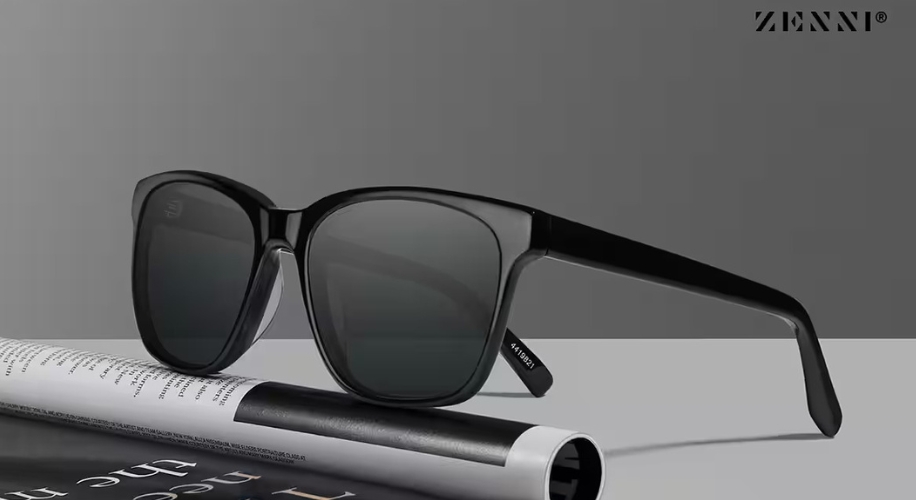
Shop These Zenni Sunglasses
Prescription sunglasses are not just about clear vision and comfort; they’re also designed to protect your eyes from physical harm:
- Durable Materials: Sunglasses designed for outdoor use are typically made with strong, impact-resistant materials, both in the lenses and the frames, to withstand the rigors of active use.
- Wraparound Styles: Many prescription sunglasses come in wraparound styles that not only offer peripheral vision but also provide extra protection against wind, dust, and debris.
- Secure, Comfortable Fit: Sport frames should stay snug on your nose bridge without pinching and rest on your ears without pressure points, with no gaps where sunlight can sneak in around the edges. Look for details like adjustable nose pads and grippy, anti-slip temple tips so your sunglasses don’t shift or bounce mid-activity. Vented designs also help prevent fogging during intense exercise.
- Frame Material: Metal frames tend to run lighter and more minimal, plastic and TR90-style frames offer more flexibility and shock absorption, and nylon frames are especially popular for fishing and water sports since they resist bending and hold up to repeated saltwater exposure.
- Convenient Access: With Zenni Optical, obtaining a pair of prescription sunglasses is just a few clicks away. No need to complicate your adventures with hard-to-find eyewear solutions.
Style Meets Function
None of this means you have to sacrifice style for performance. Frame material affects durability and comfort as much as looks, lightweight materials like titanium are a popular choice for sport and everyday frames alike, since they hold up to movement without weighing down your face. Frame shape matters too: classic aviators work well for most face shapes and activities, while wraparound and geometric shapes lean more athletic. Because prescription sport sunglasses eliminate the need to switch between your regular glasses and non-prescription sunglasses, you get one pair that performs on the field, the trail, or the water and still looks like something you’d want to wear off the clock.
Matching Your Sunglasses to Your Sport
Different sports put different demands on your eyewear. A few examples:
- Court Sports (Pickleball, Tennis): Look for wraparound frames with rubber nose and temple grips to stay put during quick lateral movement, paired with a brown, amber, or gray tint for contrast against the court.
- Fishing: Polarized lenses are essential for cutting glare and seeing beneath the surface, whether you’re spotting fish or reading changes in water color. Pair them with a water-resistant coating to repel spray, rain, and humidity, an anti-reflective coating on the back of the lens to eliminate reflections when the sun is behind you, and a durable, nylon frame that holds up over long hours on the water and resists saltwater wear. If conditions shift throughout the day, interchangeable lens tints (amber or copper for early morning, gray for peak sun) can keep you seeing clearly from dawn to dusk.
- Driving and Boating: Reducing glare with polarized lenses isn’t just about comfort, it’s a safety feature. Cutting glare from wet roads or open water improves reaction time and reduces the risk of accidents.
- Running and Cycling: Lightweight frames and photochromic lenses that adjust automatically as you move between shaded trails and open sun help you avoid fumbling with a lens swap mid-workout.
Whichever sport you’re gearing up for, the best prescription sport sunglasses combine the specific lens tint, coating, and frame to fit your activity demands with the vision correction you already rely on every day. Equipping yourself with a pair of prescription sunglasses is a smart choice for any outdoor enthusiast. They not only provide tailored vision correction and protection against the elements but also enhance overall outdoor experiences. Ready to embrace clear, comfortable vision on your next adventure? Browse Zenni’s full lineup of sports sunglasses to find the perfect pair.

FAQs
What makes prescription sport sunglasses different from regular sunglasses?
Prescription sport sunglasses are built for wraparound or curved frames, which need special lens surfacing to avoid peripheral distortion. They also typically feature secure, non-slip fits and impact-resistant lens materials suited to active use.
Do polarized lenses work with a prescription?
Yes. Polarized lenses can be combined with single vision or progressive prescriptions, giving you both glare reduction and vision correction in one pair.
What’s the difference between polycarbonate and Trivex lenses?
Polycarbonate lenses are durable and lightweight, a long-time standard for sport eyewear. Trivex lenses are even lighter with sharper optical clarity, while still offering strong impact resistance.
How do I stop wraparound sunglasses from distorting my peripheral vision?
Look for lenses made with digital surfacing technology, like Zenni’s FreeForm lenses used in Zunnies sport sunglasses, which correct the curve of a wrap frame across the entire lens instead of just the center.
What lens tint is best for outdoor sports?
It depends on your sport and lighting. Brown and amber work well for court sports and low light, gray suits bright sunny days, and copper or yellow tints help with depth perception in low-light conditions like early morning fishing.
Are prescription sport sunglasses worth it compared to regular sunglasses with contacts?
For many active people, yes. Prescription sport sunglasses remove the need for contacts during activities where dust, wind, water, or sweat can make contact lenses uncomfortable, while still giving you full vision correction, UV protection, and glare reduction in one pair.

Dr. Steven Liem
Dr. Steven Liem, O.D., F.A.A.O. is an optometrist based in Pasadena, California. After obtaining his doctorate from UC Berkeley’s School of Optometry, he completed his residency in Pediatrics, Vision Therapy & Rehabilitation and became a Fellow of the American Academy of Optometry. When he isn’t busy streaming or making Youtube videos about video games, Dr. Liem aims to broaden accessibility to vision health through his involvement in optometric industry and tech.




 United States