
Best Glasses for Round Faces (And Which to Avoid)


Shopping from Canada? Check out the Zenni Canada site.

Round faces suit frames that add angles. Here’s which shapes to reach for, which to skip, and how to get the fit right.
Do You Have a Round Face?
Round faces tend to be equal in width and length, with full or rounded cheeks and soft, curved features. Knowing your face shape can help you find flattering frames faster.

The Magic of Frame Types:
1. Rectangular:
The most reliable choice. Clean horizontal lines flatter round proportions by creating contrast.

2. Cat-Eye:
Upswept outer corners lift the eye upward and outward, emphasizing natural upward curves. Retro without trying too hard.

3. Square:
Bolder than rectangular. Sharp corners add the most contrast and structure of any shape here.

4. Browline:
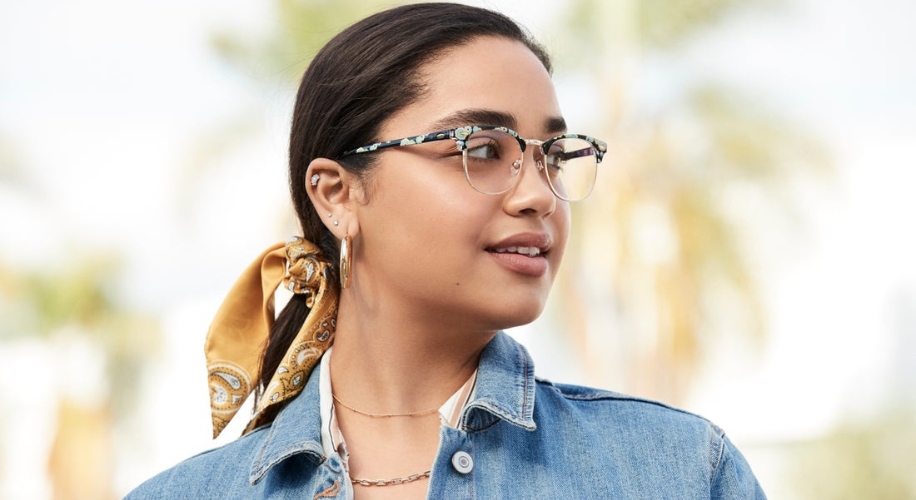
A heavier top rim with a thin or rimless bottom draws attention to the browline.

5. Geometric:
Hexagons and octagons break up curves with unexpected angles. The statement option.

6. Aviator:
The tapered lower edge flatters a round face, and aviators suit nearly every face shape.
Frame Shapes to Approach With Caution
Shapes that repeat your face’s curves don’t add any interest.
- Round frames echo the curves already in your face, missing the chance to add a flattering edge.
- Oval frames have the same problem in a softer form: no corners, no strong horizontal line, nothing that adds definition.
- Small or narrow frames can make your face look wider, whatever their shape.
- Thin wire frames aren’t wrong; they’re just quiet. Less visual weight means less structure.
- Rimless styles are the furthest end of that — light and unobtrusive, but doing almost nothing to emphasize your best features.
Making Them Work Anyway
None of this is a rule, and plenty of round-faced people wear round frames well. If you want a shape from the list above, three things help:
- Go wider. A round frame that’s wider than your face still adds horizontal emphasis, even without corners.
- Go bolder. Thick acetate in a dark color has structure that a thin wire version of the same shape doesn’t.
- Look for a flat top. Some round frames have a straight browline across the top. That single horizontal line does most of the work an angular frame would.
Getting the Fit Right
Shape gets the attention, but proportion does more of the work.
- Frame width: Aim for a frame as wide as, or slightly wider than, the widest part of your face.
- Lens height: Wider-than-tall lenses add horizontal emphasis, which is helpful if you want to de-emphasize roundness. If you wear progressives or bifocals, you’ll need at least 30 mm of lens height.
- Nose pads: Adjustable nose pads sit the frame higher on your face and keep it off your cheeks. Worth prioritizing if you have full cheeks — a frame resting on them shifts every time you smile.
- Universal bridge fit: Accommodates a wider range of nose shapes and reduces slipping.
- Temple placement: Arms attached higher on the frame draw the eye upward, adding length.
How to Find Your Measurements
Grab a pair of glasses that already fits you well. The numbers printed inside one temple arm — something like 52-18-140 — are your lens width, bridge width, and temple arm length in millimeters.
Frame width isn’t printed there, and for a round face it’s the one that matters most. Measure it yourself across the front of the frame, hinge to hinge. Staying within 2–3 mm of your current measurements will give you a comfortable fit.
Another measurement you’ll need when ordering glasses is your pupillary distance (PD). If you don’t know your PD, Zenni’s digital PD tool measures it in a minute, and Virtual Try-On lets you check the shape on your face before you order.
Color and Material
- Darker, bolder frames create the most definition. Black, tortoiseshell, and deep jewel tones read as a clear line against the face.
- Thicker acetate has more visual weight than thin wire, which means more structure.
- Contrast with your coloring. A frame color close to your skin tone doesn’t offer the opportunity for shaping.
- Clear and light frames are the subtle end of the range—lovely, just doing less structural work.
Don’t Forget Sunglasses
The same shapes apply outdoors. Square, rectangular, and geometric sunglasses all work, and aviators are worth trying specifically — the tapered lower edge lengthens a round face.
Every pair of Zenni sunglasses includes 100% UV protection, whether you go prescription or non-prescription. Polarized lenses are worth adding if you spend time driving or near water.

Start with a rectangular or square frame in a darker color — it’s the most forgiving combination for a round face. From there, try a cat-eye or geometric pair if you want something with more personality.
Shop glasses for round faces and use Virtual Try-On to compare shapes on your face, or browse all Zenni frames for the full range. Happy shopping!

About the Author: Frankie Marina
With over 15 years of experience in the optical industry, Frankie Marina is a seasoned optician who has held various roles, from General Manager overseeing optical labs and collaborating with eye doctors to her meticulous position as Final Inspector ensuring the precision of each ordered pair of glasses. Throughout her career, she has refined her expertise. Frankie’s skills include troubleshooting vision errors and curating frames for high-profile VIP clients, effortlessly blending functionality with style. Today, as a dedicated optician with Zenni Optical, Frankie is committed to helping people see better and live better by sharing her wealth of knowledge and discover eyewear solutions that not only promote clear vision, but also instill confidence.
FAQs
What are the best glasses for round faces?
Angular shapes — rectangular, square, cat-eye, browline, and geometric. They add straight lines and corners that contrast your face’s natural curves.
Should people with round faces avoid round glasses?
They’re the hardest shape to pull off, since they repeat the curves already in your face. If you want them anyway, go wider and bolder than you’d normally pick.
Do bigger frames look better on round faces?
Wider ones do. Aim for a frame as wide as or slightly wider than your face at its widest point. Very tall lenses are less flattering — width helps, height doesn’t.




 United States